

Progress Continues on Onondaga Lake Cleanup

Onondaga Lake dredging and capping began in July 2012. These are critical components of the lake cleanup plan, which was issued by the New York State Department of Environmental Conservation (DEC) and the U.S. Environmental Protection Agency. The plan is based on sound science and incorporates input from top national and local scientists, engineers, experts in the field, and community members, who participated in a series of public meetings that have been held since 2004. By the end of 2013, dredging will be about halfway complete.

Hundreds of Central New York scientists, engineers, and skilled craft laborers have been working with Honeywell on lake operations. Protection of the public's health and safety is an important part of every stage of the work to restore Onondaga Lake. Extensive efforts are taken to minimize odors.

The remedy was designed to reduce or eliminate potential hazards (enclosed pumping system, double containment pipeline, and industrial-strength geotextile tubes). Honeywell also has coordinated with local emergency responders for seamless integration in the unlikely event of an incident.

Hydraulic dredge that will be used during the Onondaga Lake cleanup.
Hydraulic dredge used during the Onondaga Lake cleanup.

In December 2011, an underground barrier wall, which intercepts contaminated groundwater from old industrial sites, was completed. Groundwater collected is being treated and tested to meet DEC requirements before it is sent to the lake.

Community Health and Safety Plans are reviewed by DEC and the New York State Department of Health.

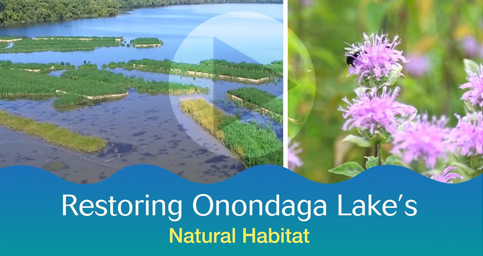
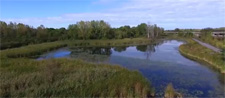
Progress continues at other sites near the lake. In 2011, work began at Geddes Brook to transform 17 acres of land into a diverse new habitat for wildlife. Wetlands around the old LCP plant in Geddes are now filled with 12,000 native trees and plants that are attracting wildlife.

Work to remediate forested wetlands, enhance stream conditions for fish spawning and migration, and improve habitat along the lower portion of Nine Mile Creek has begun.

Community input has always been, and will continue to be, a key component of Honeywell's efforts to clean up Onondaga Lake. Opportunities for public engagement are critical to achieving a successful, sustainable restoration of the lake. The Community Participation Working Group, which was appointed by DEC, provides a forum to inform, receive input and discuss the lake cleanup.

On this site you will find our Annual Report, documents, project updates, photos, e-newsletters, as well as a link to submit questions or find out how to get involved. We do our work in a way that protects health and the environment and causes the least disruption to the local community. If you would like more information, please contact Craig Milburn at 315.552.9784.

Please call us anytime if you
have an inquiry or question
315.313.8068.
Onondaga Lake Conservation Corps Logo

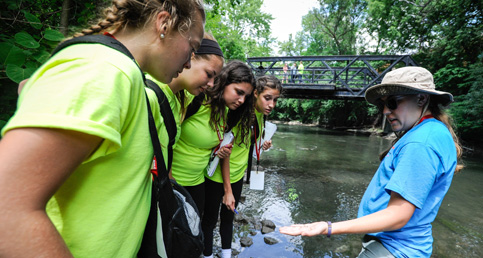
Onondaga Lake Conservation Corps seeks to inspire future stewards of Onondaga Lake and its watershed through a hands-on, experience-based program that offers invested citizens and organizations the opportunity to participate in activities that help restore and sustain Onondaga Lake and its value as an Important Bird Area.

Learn more about the Onondaga Lake Conservation Corps

To learn more about the Onondaga Lake Conservation Corps or participate in future activities, please contact Frank Moses at montezuma@audubon.org or call 315-365-3588.

The Conservation Corps' founding members are the Montezuma Audubon Center, the Onondaga Audubon Society, Parsons, and Honeywell.